


Child & Ice, 2025 – Ongoing
Interactive web component, html file, 16 kb
Adaptive for any screen
About The Artwork
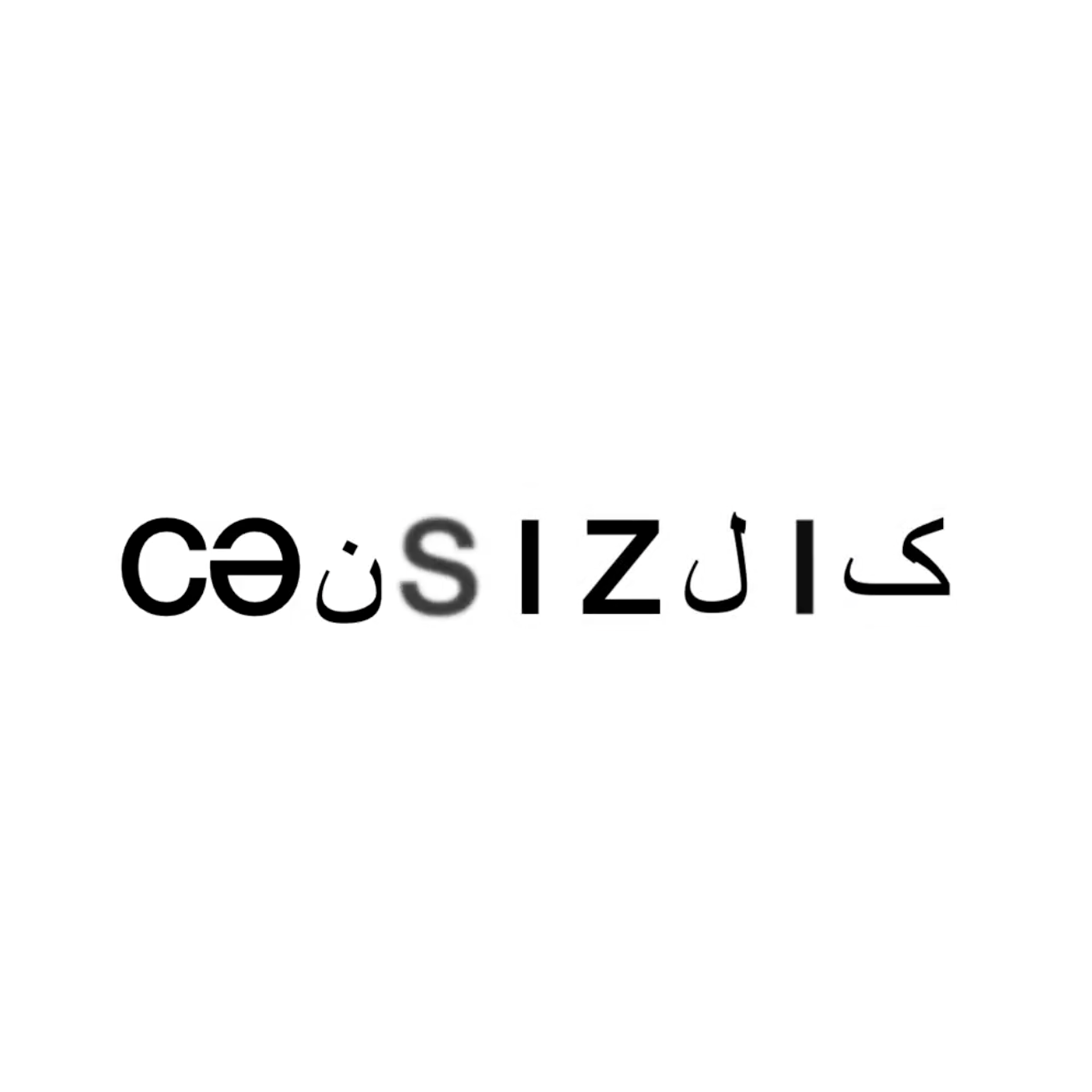
This browser-based work visualizes the linguistic instability embedded in the Azerbaijani script. Across the 20th century and into the post-Soviet period, the alphabet underwent successive official reforms that repeatedly rewired literacy and collective memory: Arabic script remained in use until Latin was selected as the sole official script in 1929 (after a period of coexistence in the 1920s); the Latin alphabet was reformed in 1933 (with a further adjustment in 1938); Cyrillicization was legislated in July 1939, the new Cyrillic alphabet was approved in November 1939, and the switch took effect on 1 January 1940; the Cyrillic alphabet was simplified in 1958; after independence, a Latin-script alphabet was introduced on 25 December 1991 and revised again on 16 May 1992. The piece presents any Azerbaijani word as a living, unstable entity. Letters continuously morph between their historical variants: Arabic ش dissolves into Cyrillic Ш, which blurs into Latin Ş. The transformations follow an organic choreography, waves of intensity punctuated by pauses and sudden accelerations, accompanied by generative bell-like tones that shift microtonally with each change. This interactive fragment forms part of Dairəvi Dairə (Circle Circular), a larger installation centered on Mirza Alakbar Sabir’s poem “The Child and the Ice”, a text that exists across all these alphabets, each version a palimpsest of political upheaval.
About Farhad Farzali