

Ania Soliman
1 March – 30 April 2026
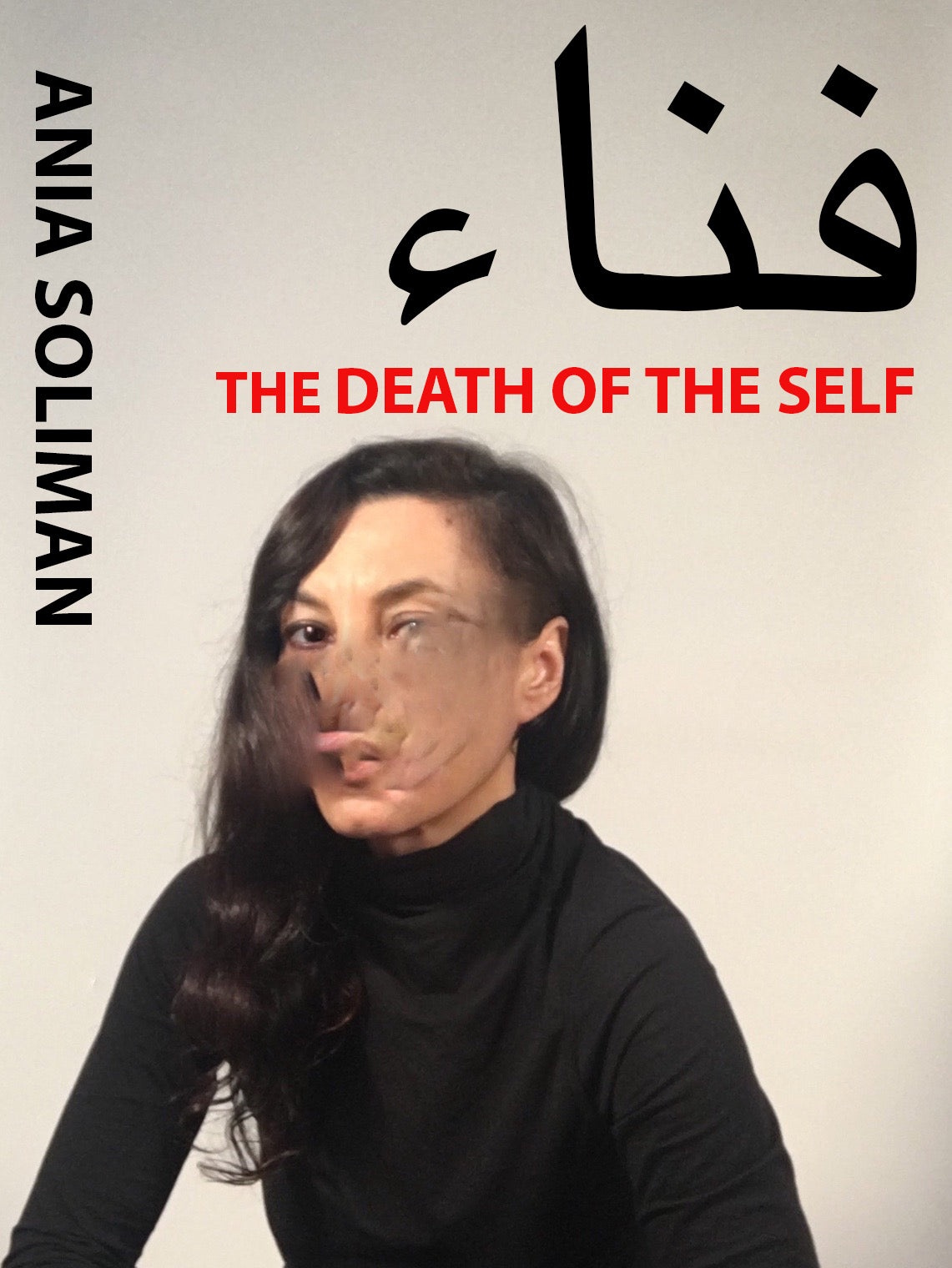
GAZELL.iO is thrilled to welcome Ania Soliman as our latest 2026 artist-in-residence.
Ania Soliman is an Egyptian/Polish/American artist who grew up in Baghdad and is based between Paris and New York. Working across drawing, painting, text, installation, and digital media, she investigates how memory is transmitted — or obstructed — across bodies, languages, and technical systems. Approaching each work as a form of transmission : something that moves between organic and synthetic structures, reshaped and distorted by their encounter , Soliman transforms digital, archival and AI - generated source material through embodied, material processes such as tra cing, layering, scraping, coloring, dripping, and waxing. Ania Soliman ’ s work has been exhibited at Misk Art Institute, Riyadh, (2024), Castello di Rivoli, Turin (2023, 2018), Fundación Helga de Alvear, Cáceres (2022), Kunsthaus Bregenz (2020), the Drawing Center in New York (2020, 2010), the Museum der Moderne in Salzburg (2016), the Museum of Contemporary Art at Antwerp (2015), the Whitney Biennial (2010), the 14th Istanbul Biennial (2015), the Museum der Kulturen in Basel (2014), among other venues. She attended Harvard College and Columbia University before participating in the Whitney Independent Study Program. In 2025, she realized a special commission for Art Dubai.
Ania Soliman
Week 6
Cuneiform <~> AI: 8
Eclipse calculations pressed into clay and now language coming out of organized silicon as if someone was talking.

Week 5
Post 1
Cuneiform <~> AI: 6
Building a place of un-writing that suggests code but also landscape and each being’s interiority: how painting and drawing can respond to the culture of the screen.
Gilgamesh II. Acrylic on canvas, 150x150cm, 2026

Post 2
Cuneiform <~> AI: 7
Finding strength by reimagining the past.


Week 4
1. Cuneiform <~> AI: 5
Babylon=Whore? Tablet says no, Claude suggests maybe (but then glitches).
Once women entered the field of Assyriology different pasts began to be uncovered: “temple prostitute” started being translated as “unmarried woman.”
Now reading the extraordinary #zainabbahrani on the “Women of Babylon,” for a deeper take.
……………………………
Images:
1. “Babylon Is A Very Nice Place And Its Priestesses Virtuous.” Acrylic on canvas, 130x100cm, 2026.
2. Claude’s “100 word” map with only a fraction of the promised words, caused a weird, protracted argument with a machine.
But it also provided the Rastafari reference—which is how Babylon came into my consciousness when I got my first Bob Marley cassette, smuggled by my father into Baghdad from Kuwait.
3. Fragmentarium-AI assisted transliteration of this tablet’s text with the mysterious phrase “Cloistered women who, with their skill, nourish the womb with life.”
Data set problems in our minds as well.


Week 3.
How does one thought follow another? Nonstop flow of language in the mind. Triggers/prompts/associations, the mysteries of that. Machines struggle with this too now.
A. Asking GPT, Claude and Deep Seek to illustrate the word Babylon in latent space--everyone glitched.
B. LLMS are notoriously bad at self-analysis, experiencing similar frustration we do when trying to explain the working of our own minds. Here Either Claude or GPT apologizing for making the same mistake repeatedly. (Screenshot from a WhatsApp group)
C. A Cuneiform praising Babylon in a hymn whose exact wording was copied over the centuries. It was discovered with help from the Fragmentarium, an LLM that helps reassemble and transcribe texts from broken fragments.
Assyriology depends on the Assyriologists.
A. The Assyriologists V (Graphite and Acrylic on canvas, 60x60cm, 2024)
B. The Assyriologists IV (Graphite and Acrylic on canvas, 60x60cm, 2024)
C. The Assyriologists I (Graphite and Acrylic on canvas, 60x60cm, 2024)


Week 2
Cuneiform <~> AI: 1. How to make art in times of war or crisis?
Working from places where language breaks down.
-------------------------------------------
Rock-like forms inscribed with memory that has left the body.
Selecting tablets from different collections I was surprised to learn, in the year 2026, that this writing system existed for close to 3000 years, dying out near “year zero,” and now only legible to around 200 people and a dedicated LLM.
1. Template Lament II (Enheduanna), 2026, Acrylic on canvas, 130x130cm
2. Manosphere I (Gilgamesh), 2026, Acrylic on canvas, 50x60cm


