
Babylonian Vision, 2020
Gan Video
About The Artwork
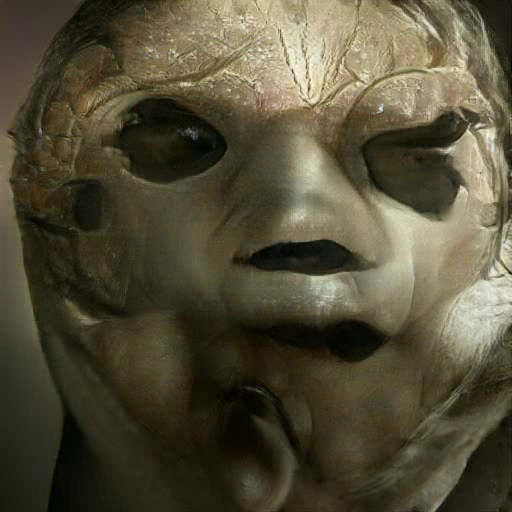
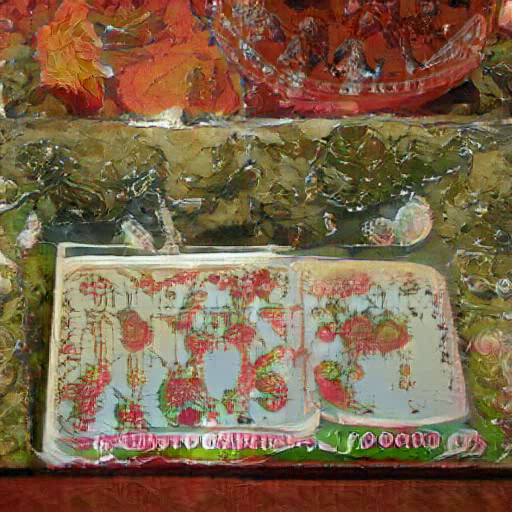
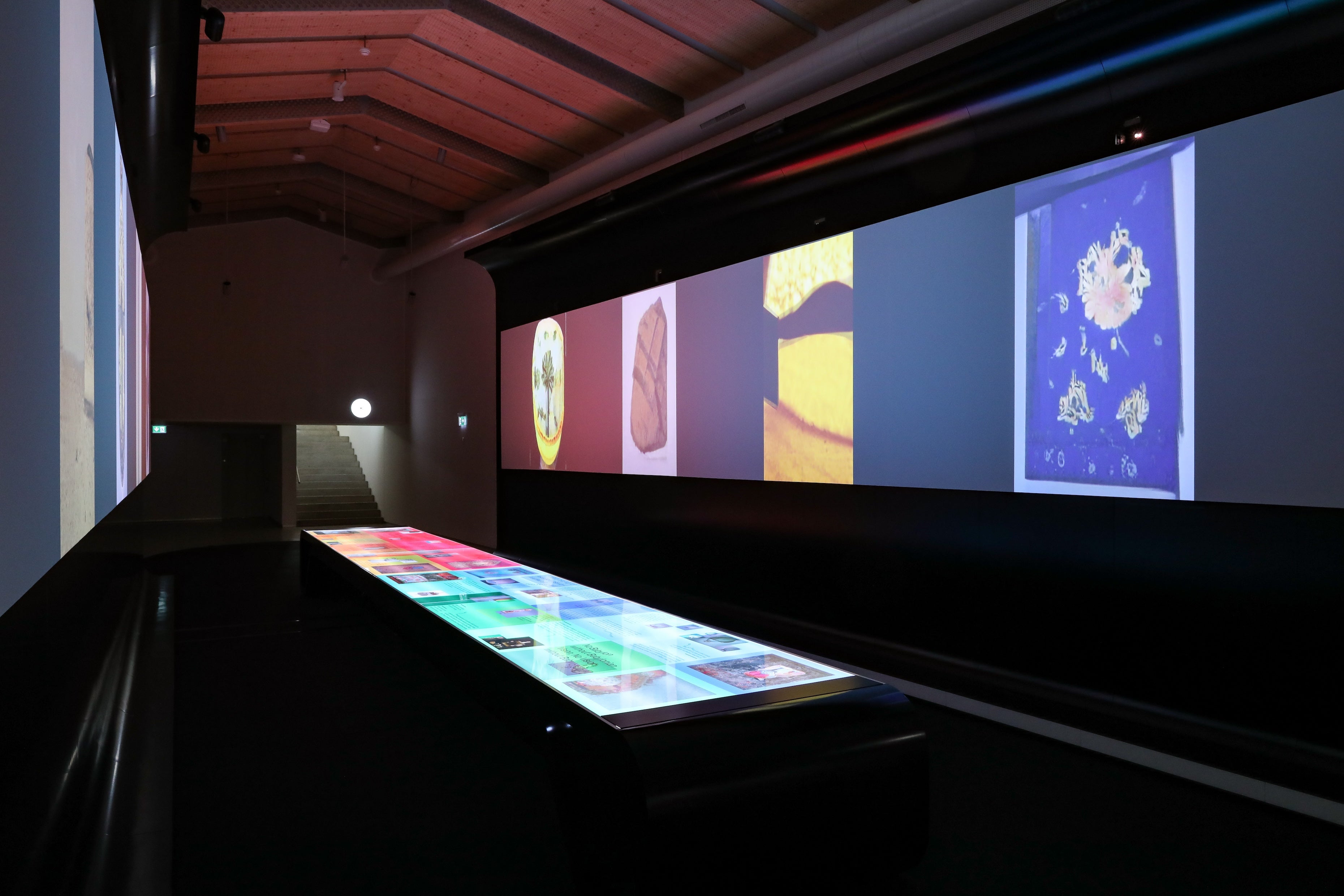
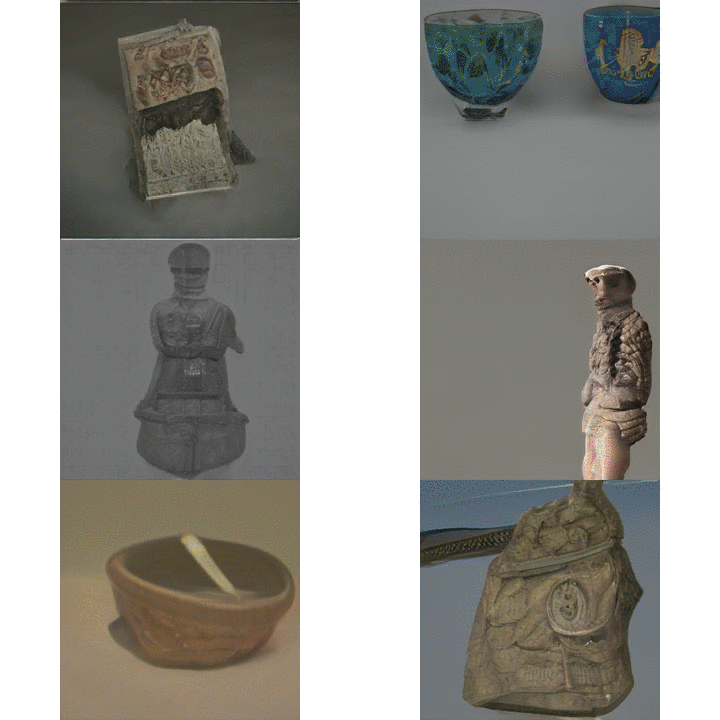
Al-Badri expands on speculative archaeology and decolonial as well as machine learning based museum practices by generating technoheritage. A pre-trained neural network based on GAN technology (Generative Adversarial Networks) was trained with 10.000k images from 5 different museum collections with the largest collections of Mesopotamian, Neo-Sumerian and Assyrian artefacts. The images were in the majority collected through web crawling and scraping and without the institutions approval (even though she asked each museum beforehand) and just two through their open API. Subsequently new synthetic images evolve as a living memory of the images. The generated image is at the same time the artefact itself. Yet, materiality is very important, since the input images are images of material objects of our past. If MI is seen as a technology performing and processing our collective memory it makes sense to apply it to our big cultural data of the past and to generate new images as traces and circulating image worlds. Applying MI to cultural big data supplies other, more speculative and abstract insights on the search for a visual language, form and pattern of an era within a specific spatial context: Babylonian. The input images of these databases carry time and memory themselves (patina, broken pieces, most of them mid- to low-res). Subsequently new synthetic images evolve as a living memory of the images. The generated image is at the same time the artefact itself. The series consists of over 150 videos.
The work was awarded a honorary mention from Art Jameel.
With texts written by: Prof. Wendy M. K. Shaw, Dr. Fazil Moradi, Dr. Saud Al-Zaid, Daphne Dragona, Dr. Anita Hosseini
Engineers: Negar Foroutan and Melika Behjati
Realised in the framework of the Swiss Federal Institute of Technology Lausanne CDH AiR program 2019
About Nora Al-Badri
Nora Al-Badri is a paradisciplinary and conceptual media artist with a German-Iraqi background. Her works are research-based as well as anticolonial. She lives and works in Berlin. She graduated in political sciences at Johann Wolfgang Goethe University in Frankfurt/Main and was a lecturer at the Eidgenössische Hochschule (ETH) in Zurich until 2025. Her practice focuses on the politics and the emancipatory potential of new technologies such as machine intelligence or data sculpting. Al-Badri’s artistic material is a speculative archaeology from fossils to artefacts or performative interventions in museums and other public spaces, that respond to the inherent power structures. In 2025 she was a fellow and artist in residence at both Max Planck Institute for Humans and Computers and at Freie University Berlin. She has exhibited in the Viktoria and Albert Museums' Applied Arts Pavilion at La Biennale di Venezia, Design Biennal Istanbul, ZKM Karlsruhe, KW Contemporary Berlin, Science Gallery Dublin, NRW Forum, Jeu De Paume Paris, European Media Art Festival, Transmediale, Space Fundacion Telefonica, Ars Electronica, REDCAT Roy and Edna Disney/CalArts Theater amongst others. Her work was featured at The New York Times, BBC, The Times, Artnet, Wired, Le Monde Afrique, Financial Times, Arte TV, The Independent, New Statesmen, Hyperallergic, Smithsonian, Al Ahram, Egypt Today, Vice, Hürriyet, Dezeen, Frankfurter Allgemeine Sonntagszeitung, Spiegel Online, Heise, The Boston Globe, Dezeen, Archdaily, Polska, La informacion, De Volkskrant, Gizmodo, New Scientist, Popular Science and The Verge amongst others. Her works got granted by several institutions like Bundeskulturstiftung, Haus der Kulturen der Welt (HKW), Goethe-Institut, Institut für Auslandsbeziehungen (IfA), German Federal Foreign Office and European Cultural Foundation (ECF), Senate of Berlin City. Al-Badri regularly gives classes and lectures at universities and museums all over the world such as Techne Institute at University of Buffalo, MassArt Boston, UDK university Berlin, Hochschule Weissensee Berlin, KTH Royal Institute of Technology Stockholm, University of Halle and IRIBA Center for Multimedia Heritage and different Kigali, Warburg Institute and Central Saint Martins College London, UCL London, Einstein Center for Digital Future Berlin, Leuphana University Lüneburg, Museum für Kunst und Gewerbe Hamburg, Migros Foundation, Haus der elektronischen Künste Basel, Mozilla Festival and many more. She is board member for Transmediale Berlin since 2024 and was acting as jury member for the Chaos Communication Congress' Arts & Culture Track until 2022.